
Commercial Lock Upgrades Every GTA Business Owner Should Consider
Plaza storefronts, small offices and warehouse back doors all wear out locks in the same ways. Where to look first, and the upgrades that actually pay off.
Start with the doors that get the most abuse
Most GTA businesses don't need a full security overhaul. They need the two or three doors that actually get used to work properly, and they need to know who has keys.
Think about a typical strip plaza in Mississauga or Etobicoke. There's a narrow aluminum-and-glass front door that opens hundreds of times a day, a steel back door onto the laneway where deliveries come in, and maybe an office or stock room inside. Those are the doors that fail, and they fail in predictable ways.
The storefront door
Glass storefront doors usually lock with a hook-shaped bolt that swings into the frame. Over time the door sags on its pivots, and the bolt starts to miss or drag. Staff learn to lift the door or lean on it to lock up at night. That's the warning sign.
Fixing the lock without fixing the door just buys a few months. Often the real fix is adjusting the pivots or the closer, then the strike. A cylinder that spins in the door frame is another common one, and it shouldn't wait.
The back door
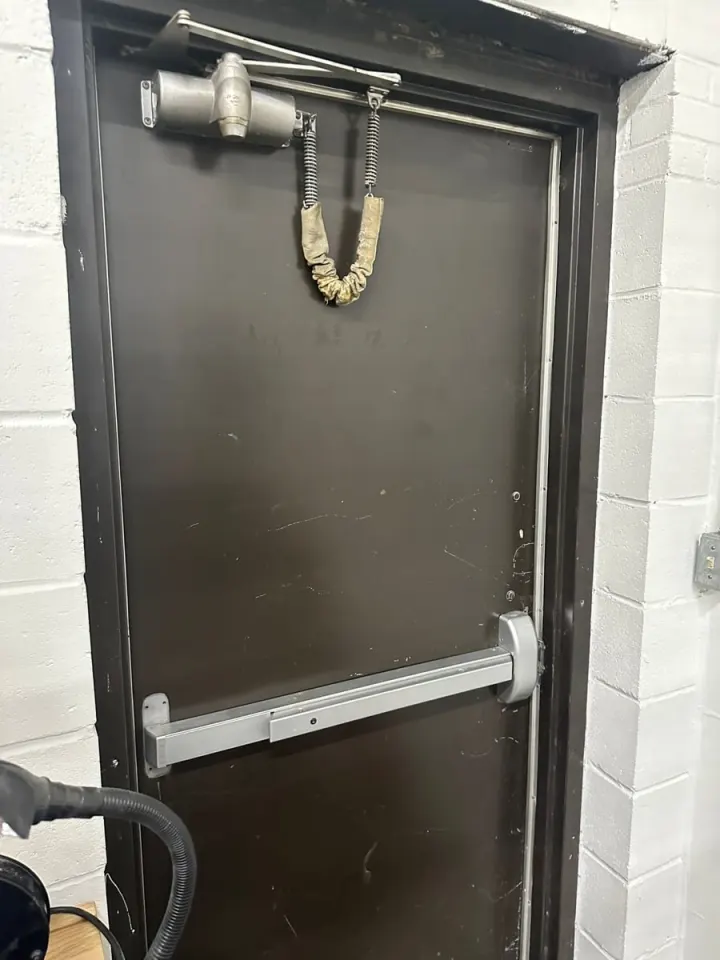
Back doors take a beating from deliveries, carts and weather. Look for a closer that slams the door (which hammers the lock every time), a latch that only catches if you pull hard, and a frame that's been pried at before.
If the back door is also a fire exit, it has to open from the inside without a key. Don't add a padlock, a chain or a second deadbolt on the inside to solve a lock problem. Panic bars and exit devices are designed for exactly this, and they can be repaired or upgraded while keeping the exit working.
Get control of your keys
This is the upgrade most small businesses skip, and it matters more than any single lock. Ask yourself how many keys to your front door exist right now. If you're not sure, that's the answer.
- Rekey when people leave. A former employee or contractor with a key is a real risk, even if they were great.
- Restricted keys. These are cut on blanks that can't be copied at a hardware store kiosk. Copies go through an authorized locksmith with your sign-off.
- A master key system. Managers carry one key. Staff get keys only for the doors they need. When someone leaves, fewer locks need attention.
- A simple key log. Who has which key and when they got it. A sheet in the office is enough.
Upgrades that are worth the money
Commercial-grade levers and deadbolts on office and stock room doors. Residential hardware wears out fast under commercial traffic.
Keypads or access control if staff change often. Removing a code is easier than rekeying.
A properly adjusted closer. It protects the lock, keeps the heat in during a GTA winter and makes sure the door actually latches at night.
Upgrades that rarely pay off: fancy hardware on doors nobody uses, or a high-security cylinder in a door that doesn't close properly.
Where we come in
We repair and upgrade storefront locks, rekey after staff changes, set up master key systems and service exit hardware and closers through our commercial locksmith service. We work across the GTA, including Etobicoke, Mississauga and North York.
Door dragging, keys unaccounted for, or a closer slamming? Call or text FixLock at (647) 788-8778. Tell us the type of door and what it's doing, and send a photo of the lock if you can.
Keep reading