
Old Mortise Locks in Toronto Century Homes: Repair, Rekey or Replace?
Heavy wood door, tall brass plate, a keyhole older than anyone on the block? That's usually a mortise lock. Here's how they fail and what can be saved.
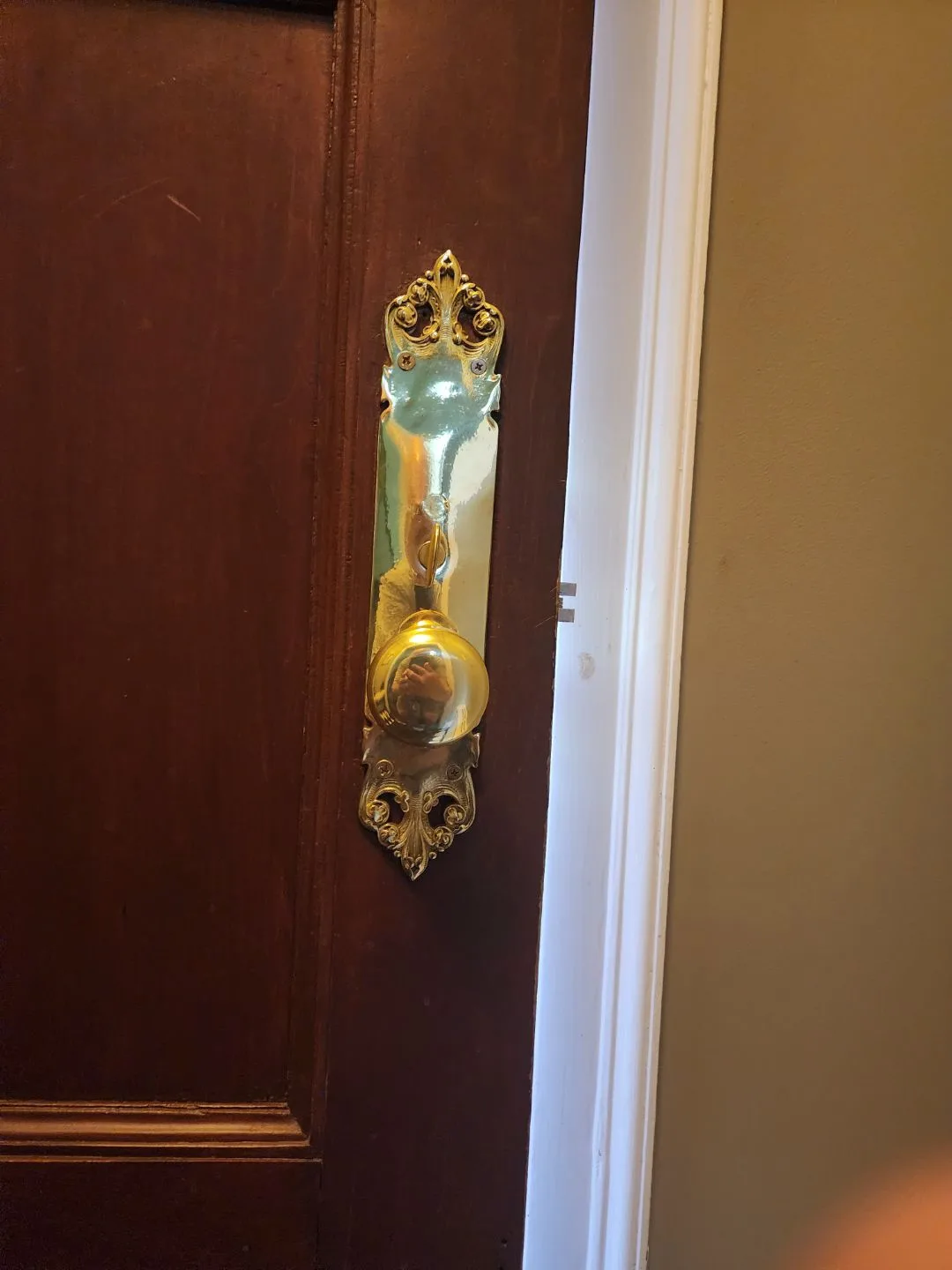
The lock on a lot of old Toronto front doors
Walk down almost any street in The Annex, Leslieville, Riverdale or Roncesvalles and you'll see them: heavy wood front doors with a tall brass plate, a thumb-latch handle and a keyhole that's been there longer than anyone on the block. That's usually a mortise lock.
Mortise locks were built to last, and plenty still work. But after decades of Toronto winters, repainting, renos and a house settling, they tend to develop the same handful of problems. Here's how to tell what's going on, what can be repaired and when it makes sense to replace.
What a mortise lock is
A mortise lock is a rectangular lock body set into a pocket (the mortise) cut into the edge of the door. The latch, the deadbolt and the handle spindle all run through that one box. On front doors, a separate threaded key cylinder screws into the body from the outside and is held by a set screw on the edge of the door, under the faceplate.
Interior doors in older houses often have a simpler version that takes a skeleton key. Those were never meant for security. They're privacy locks.
The problems that show up in older GTA homes
The latch won't catch, or only catches when you lift the door. This is usually the door, not the lock. Old wood swells in humid summers and shrinks once the furnace dries the air out. Porches and frames shift a little with freeze and thaw. The latch ends up a few millimetres off the strike plate. Sometimes the fix is adjusting or moving the strike. Sometimes it's the hinges.
The key turns but the bolt doesn't move. Something inside the body is worn or broken: a spring, a tailpiece or the cam on the back of the cylinder. These parts can often be replaced without changing the whole lock.
The cylinder spins in the door. The set screw has backed out or stripped. A loose cylinder can sometimes be unscrewed from outside, so this one shouldn't wait.
The handle droops or the thumb latch feels loose. Usually worn springs inside the body. Often repairable.
Layers of paint. Decades of repainting can glue the faceplate, latch and bolt in place. Careful cleaning can bring a lock back.
Nobody has the key anymore. Common with side doors and interior locks. A new key can usually be made, or the cylinder can be rekeyed.
Repair, rekey or replace?
Repair when the body is solid and the problem is a spring, a cam, alignment or paint. You keep the original hardware and the look of the door.
Rekey when the lock works fine but you've just bought the house, lost a key or don't know who has copies. A modern-style cylinder in a mortise lock can be rekeyed like any other. If you're not sure which you need, our rekey vs. replace guide walks through it.
Replace when the body is cracked, parts aren't available or the lock isn't secure enough for a front door. Old front-door mortise locks vary a lot in strength, and some offer very little real protection. When you replace, there are two routes:
- A new mortise lock in the same pocket. The least invasive option. The faceplate size and the backset (the distance from the door edge to the centre of the keyhole) need to match closely, or the pocket has to be modified.
- Convert to a modern deadbolt and lever. Possible, but it often means filling the old pocket and drilling new holes in a solid old door. On a good oak or fir door, think twice. Retrofit plates can cover old cut-outs, but they don't suit every door.
Ask whoever does the work which route they're proposing and why, before anyone starts cutting.
What about interior skeleton-key locks?
If they work, leave them as privacy locks. If a child keeps locking themselves in the bathroom, a new key can usually be made or the bolt can be disabled. They're not worth "upgrading" for security.
A few things you can check yourself
- Close the door slowly and watch where the latch meets the strike. Scuff marks above or below it tell you the door has moved.
- If the cylinder wobbles or turns in the door, stop using it as your only lock and get the set screw tightened or replaced.
- Don't spray household oil into the keyway. It gums up with dust. Use a lubricant made for locks.
- Don't force a key that sticks. Old keys wear thin and snap.
Where these locks turn up
Mortise hardware is all over the older parts of the city: century semis in The Annex and Leslieville, houses along the Danforth and in East York and Leaside, and the older streets around Weston and Mount Dennis in York. We work across Toronto, East York and York, plus the rest of the GTA. If an old lock has failed and you can't get in, that's lockout assistance. For repairs, rekeying or replacement, see our residential locksmith service.
Old lock acting up? Call or text FixLock at (647) 788-8778. A photo of the faceplate on the edge of the door and the keyhole side helps us figure out what you have before we arrive.
Keep reading